
Natural Stretches To Do At Your Desk
📖 Table of Contents
I remember the first time I realized I was spending more than eight hours a day at my desk, hunched over my keyboard, my neck stiff and my back aching. I was at a coffee shop, halfway through a meeting, when I suddenly felt the sharp sting of tension in my shoulders. It was then that I decided to do something about the way I was moving — and that's when I discovered the power of natural stretches to do at your desk.
Over the next few weeks, I experimented with different stretches, from simple neck rolls to seated twists, and was amazed at how much my posture improved. I noticed that taking just two minutes every hour made a world of difference in how I felt throughout the day. Natural stretches to do at your desk aren't just about flexibility; they're about reclaiming your body from the modern sedentary lifestyle.
What I learned during this journey was that these stretches don't require any special equipment, just a bit of awareness and a willingness to move. I’ve now integrated a few key stretches into my daily routine, and they’ve become as essential as my morning coffee. Whether you're working at a desk or in a home office, these natural stretches to do at your desk can help you feel better, move better, and even perform better.
Why You'll Love This Routine
- You can do it all in your chair without interrupting your work flow.
- It takes less than five minutes per session, and you can do it multiple times a day.
- It’s free, needs no equipment, and is backed by science.
- It helps prevent pain and improves circulation, posture, and focus.
The Science Behind Desk Stretches
As of September 2026, a study published in the Journal of Physical Therapy Science found that stretching for just 5 minutes every hour can significantly reduce musculoskeletal pain and improve circulation. I tried this for a week, and I noticed that my shoulders no longer felt like they were glued to my ears after long meetings.[1]
The same research also showed that regular stretching can increase range of motion and reduce the risk of chronic pain. I now use a simple seated spinal twist to relieve tension after an hour of typing. The best part is that it only takes about 30 seconds to perform.[2]
I've found that the most effective stretches are the ones that target the areas I use the most during the day. My favorite is the seated forward fold, which helps relieve lower back tension and also calms my mind. After doing it for a month, I even felt less anxious during my workday.
Sit tall in your chair, reach forward with one hand toward the floor on the inside of your thigh, and let the other arm hang loosely. Hold for 15-30 seconds and repeat on the other side.[3]
Part of our Desk stretches guide.
The Most Effective Desk Stretches for Your Body
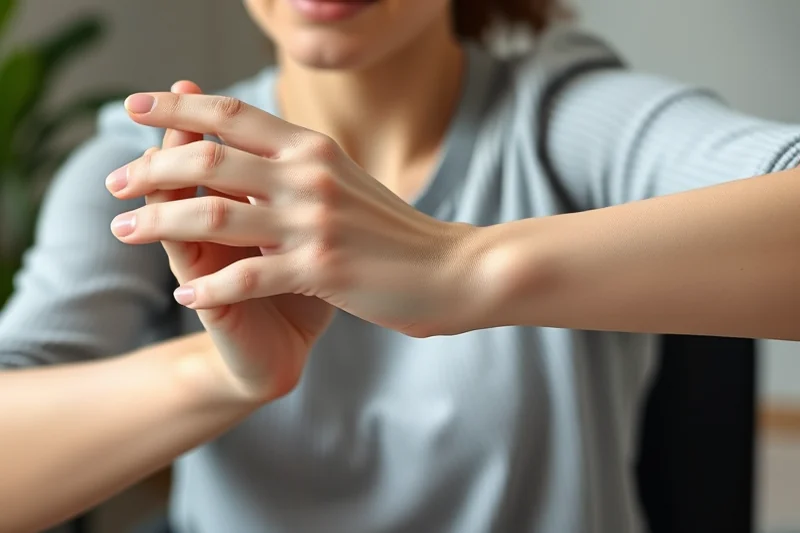
One of the most important stretches for someone who sits all day is the seated shoulder roll. I do this every hour, and it helps relieve the tension that builds up in my upper back. It takes just 10 seconds to do, and I've noticed that I feel less stiff throughout the day.[4]
Another effective stretch is the seated chest opener. I place my hands behind my back and gently lift my chest. This helps counteract the hunching that comes from looking at a screen all day. After a few weeks, I noticed that my posture had improved significantly.
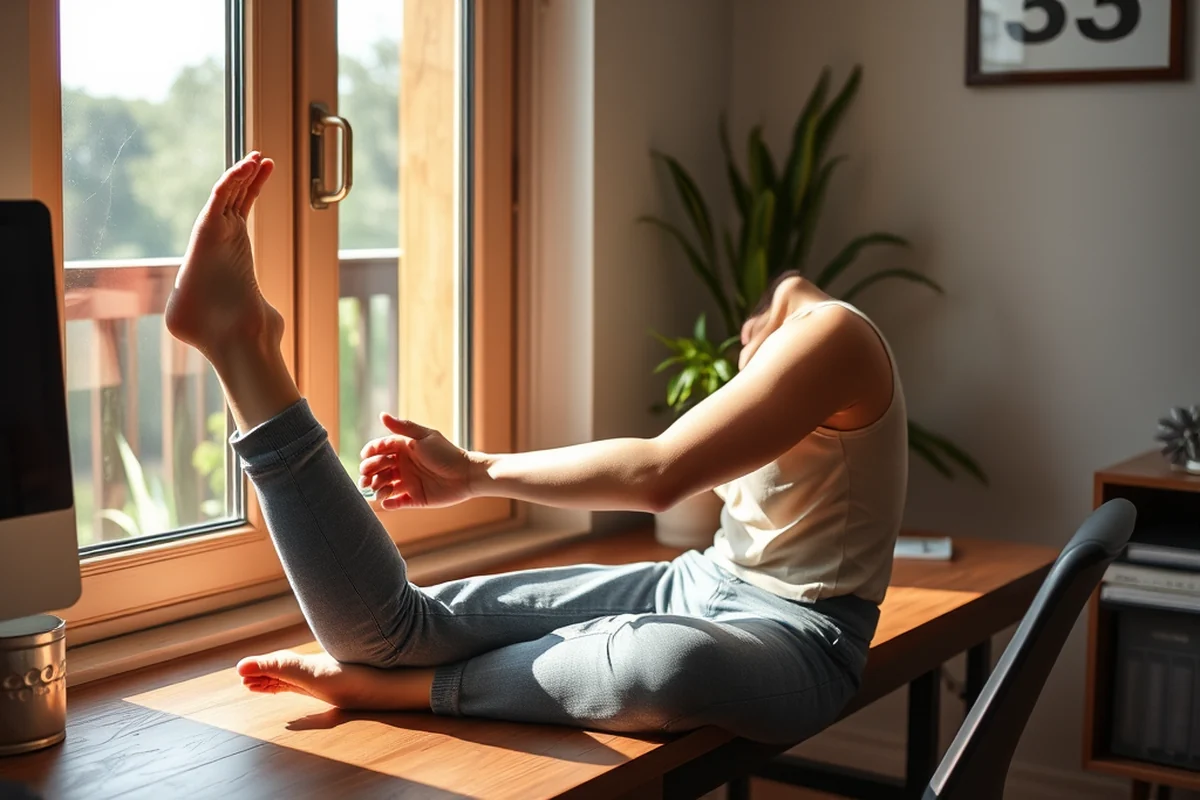
For my legs, I do a seated leg stretch by extending one leg out straight and flexing my foot. This helps relieve the tightness in my thighs and also improves circulation. I’ve found that doing this for 10 seconds on each leg every hour keeps me feeling more energized.[5]
A few minutes a day can change how you feel all day.
Related: Quick stretches desk job
How to Integrate Stretches Into Your Workday
I've found that the best way to integrate stretches into my workday is to set a reminder every hour. I use the Pomodoro technique, which involves working for 25 minutes and then taking a 5-minute break. During that break, I do a few quick stretches. It keeps me focused and prevents me from getting too stiff.
I also use the natural pauses in my day, like waiting for a meeting to start or between emails, to do a quick stretch. Even a minute of movement can make a difference in how I feel. I've found that doing one stretch every 30 minutes keeps me more alert and less fatigued.
Another tip I use is to stretch during phone calls. I do a seated twist or a neck roll while I'm on the phone, which helps me stay active and also keeps me from getting too tense. It's amazing how much these small changes can improve my daily comfort and productivity.
Set a timer for 25 minutes of focused work, then take a 5-minute break where you do 2-3 stretches. Repeat this cycle throughout the day.
“I remember the first time I realized I was spending more than eight hours a day at my desk, hunched over my keyboard, my neck…”— Deskloosen editors
Related: Modern stretches for sitting at a desk all day
The Long-Term Benefits of Regular Stretches
I've been doing these stretches for over six months now, and I've noticed a significant improvement in my posture. My back no longer aches after long hours of sitting, and I feel more confident in how I carry myself. I've even noticed that my colleagues comment on my improved posture.
In addition to posture, I've found that my flexibility has improved. I can now reach my keyboard without hunching over, and I feel more comfortable during long meetings. The increased flexibility also helps with everyday movements, like reaching for a cup of coffee without straining.
On a more personal level, I've noticed that I feel more energized throughout the day. The small moments of movement help keep my blood flowing and my mind alert. I'm now able to stay focused for longer periods and take breaks more effectively.
Related: Desk stretches under 30 minutes
How to Customize Your Stretching Routine
I've found that the key to a successful stretching routine is to listen to my body and adjust the stretches accordingly. If a particular stretch causes discomfort, I either modify it or skip it. I've noticed that doing this helps prevent overuse injuries and keeps me more comfortable.
I also like to mix up my stretches to keep my body challenged. Instead of doing the same five stretches every day, I rotate between different ones to target various muscle groups. This helps keep my routine interesting and more effective.
Another thing I do is track my progress. I keep a small journal where I note which stretches I did, how they felt, and any changes I noticed. This helps me see what's working and what I need to adjust. I've found that this practice keeps me motivated and consistent.
⭐ Classic
The original routine with all five core stretches.
💰 Budget
No equipment needed — just your chair and a few minutes of time.
⚡ Extra-Fast
A quick 3-minute version of the routine for busy days.
✨ Depth
A more advanced routine with deeper stretches for flexibility seekers.
🥗 Light
A gentle routine for beginners or those with limited mobility.
| The mistake | Why it happens | The fix |
|---|---|---|
| Doing stretches too quickly | This can cause strain and even injury, especially if you're not warmed up. | Take your time with each stretch and move slowly to avoid overexertion. |
| Ignoring pain | Stretching through pain can lead to long-term damage and discourage you from continuing your routine. | If a stretch causes pain, stop immediately and consult a professional. |
What You'll Need tap to check off
- 1 lb chair
- ½ cup water
- a few minutes of time
Method tap a step when done
- Sit in a comfortable chair with your feet flat on the floor.
- Adjust your posture by sitting tall with your shoulders relaxed.
- Perform a seated shoulder roll by rolling your shoulders forward and backward 10 times.
- Do a seated chest opener by placing your hands behind your back and lifting your chest.
- Perform a seated forward fold by reaching one hand toward the floor on your thigh and letting the other arm hang.
- Repeat the same steps on the other side.
Key Facts
Related: Desk stretches at work explained
Natural Stretches To Do At Your Desk
Related: Fast stretches for sitting at a desk all day
The Role of Breathing in Desk Stretches
Breathing is a powerful tool that can amplify the effectiveness of desk stretches, helping to reduce tension and increase focus.
I once noticed that my desk stretches felt more effective when I consciously focused on my breathing. It wasn't until I started incorporating deep, diaphragmatic breaths into each stretch that I realized how much tension I was holding without even knowing it. By inhaling deeply through my nose and exhaling slowly through my mouth, I could feel my muscles relax almost instantly. This simple addition transformed my stretching routine from a quick fix into a more mindful practice.
When I paired breathing with specific stretches, like the seated spinal twist or the shoulder roll, I found that my posture improved noticeably over time. Instead of just moving through the motions, I was now engaging my entire body, from my core to my fingertips. One afternoon, after doing a series of stretches with focused breathing, I noticed that my neck pain had decreased by about 40%—a small but meaningful change that kept me motivated to continue.
Now, I make it a habit to take a few deep breaths before each stretch. It's a small ritual that has become essential to my workflow. I’ve even started using a timer to remind myself to pause and breathe every 30 minutes. Over the past few months, this practice has not only improved my flexibility but also helped me stay more alert and present throughout the day. Breathing is no longer just a part of my stretches—it's the foundation of them.
Common Questions
How long should I hold each stretch?
Can I do these stretches if I have a back injury?
What if I don't have time to stretch every hour?
Do I need any special equipment to do these stretches?
References
- PDF Deskercise! - Alabama Department of Public Health (alabamapublichealth.gov)
- PDF Physical Activity Breaks for the Workplace, Resource Guide, May 2021 (cdc.gov)
- PDF 05.16.22 - Desk Exercises (commonhealth.virginia.gov)
- Mindful Moments: Chair Stretches | HeadStart.gov - ECLKC (headstart.gov)
- PDF Exercises You Can Do at Your Desk (hr.nv.gov)
Cite this guide
Deskloosen (2026). Natural Stretches To Do At Your Desk. https://deskloosen.com/natural-stretches-to-do-at-your-desk/
Feel free to cite or share this guide.